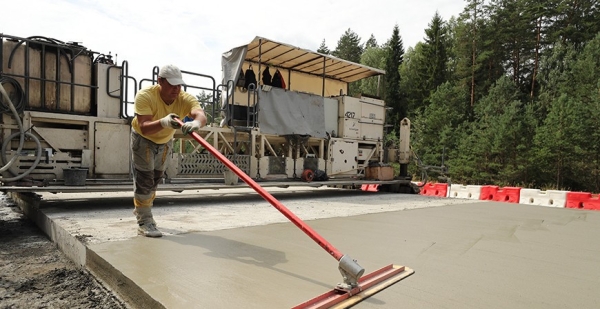
Reconstruction of M-3 Minsk–Vitebsk highway: how a mobile paver creates a concrete roadway
Monday, 17 August 2026
M-3 Minsk–Vitebsk highway is a key part of the shortest overland route to Leningrad Region and Russian seaports, including Ust-Luga, one of the largest in Europe. Currently, at the 73rd kilometer, the road is being paved with concrete using a modern mobile paver.
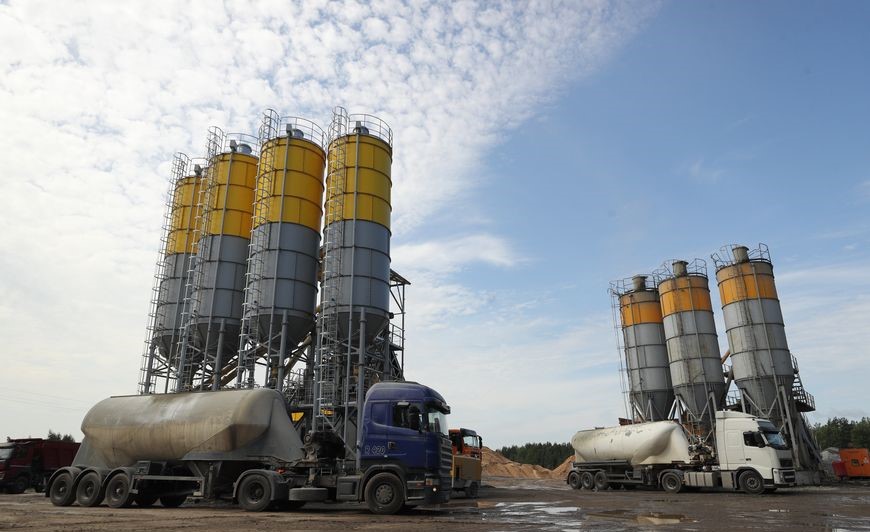
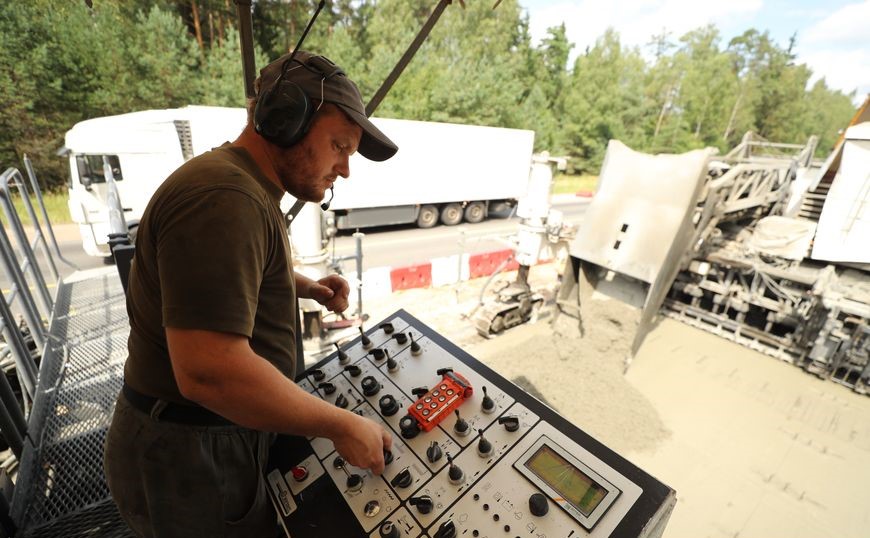
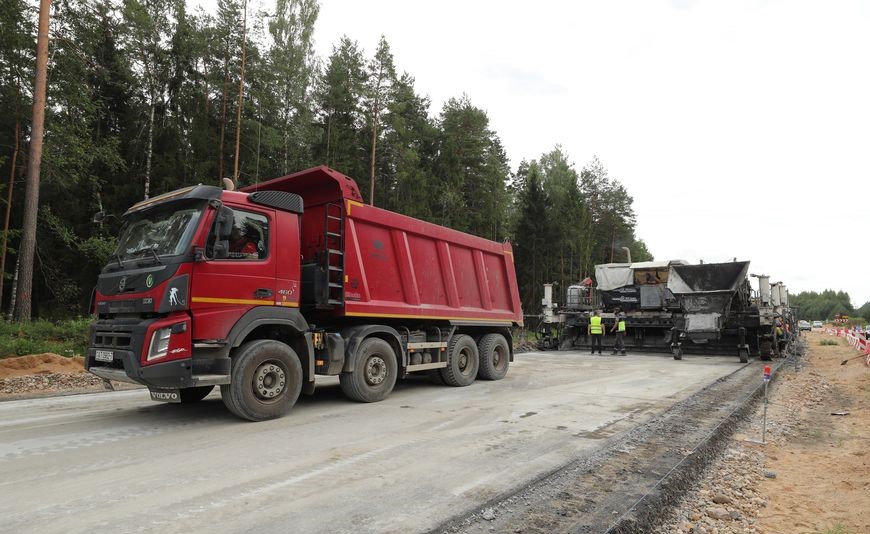
Two mobile plants are operating alongside the highway. A laboratory monitors every batch, both at the point of production and at the placement site, all along the route. Dump trucks discharge concrete in front of the paving machine; some of the material is spread across the full width of the traffic lane, while a loader places the rest onto a conveyor belt for the second layer.
Roman Kulinkovich, a project manager at Road Construction Trust No. 5 (part of holding company “Belavtodor”), noted:
"Because the paving units operate in sequence, a robust, monolithic structure is created. The combined thickness of the two concrete layers is 24 cm (18 cm plus 6 cm). This is in addition to the underlying base – comprising sand, stone, and lean concrete – and the leveling and bonding asphalt interlayer. Meanwhile, an automated arm smooths the freshly laid surface. The next section of the paver uses a stiff brush to apply texture to the pavement; this crucial finishing touch ensures proper traction between vehicle tires and the road."
◽️The choice between concrete and asphalt should be based not only on technical specifications but also on specific operating conditions, the region's climate, and economic factors. Read more in the BELTA report.
Photo by: BELTA
Image Gallery
View the embedded image gallery online at:
https://mintrans.gov.by/en/press-tsentr/novosti/item/14989-rekonstruktsiya-avtodorogi-m-3-minsk-vitebsk-kak-mobilnyj-ukladchik-sozdaet-betonnuyu-trassu#sigProIdf510e8589e
https://mintrans.gov.by/en/press-tsentr/novosti/item/14989-rekonstruktsiya-avtodorogi-m-3-minsk-vitebsk-kak-mobilnyj-ukladchik-sozdaet-betonnuyu-trassu#sigProIdf510e8589e